Before & after: real patients, real results.
We have a library of 150+ documented cases. Photos shared with patient consent only, first name + last initial format for HIPAA compliance.
Patient gallery is being curated for launch.
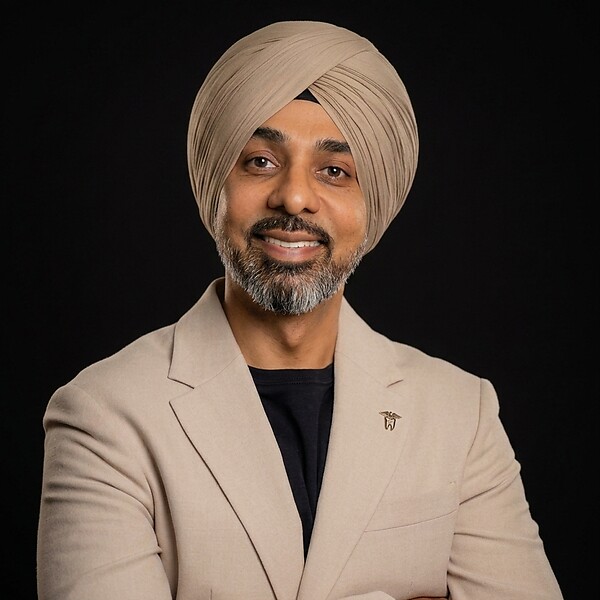
We have over 150 high-resolution before/after cases in our consent library. The full gallery is being prepared with patient stories, procedure tags, and filterable search. In the meantime, request the curated gallery via the virtual consult. Dr. Sunny will share matching cases relevant to your treatment.
How to evaluate implant outcome photography critically, and what before-and-after galleries reveal about surgical skill that marketing copy does not.
Why before-and-after photography is a more honest signal than testimonials for implant work
Patient testimonials primarily capture the consult and surgical-day experience: communication quality, pain management, front-desk professionalism. They are valuable but they cannot speak to clinical outcomes. Before-and-after photography, when shot under standardized lighting and intraoral conditions, reveals the actual prosthodontic and surgical work product. Several specific markers in before-and-after photos signal high-quality implant restoration: (1) crown emergence profile (the way the crown emerges from the gum tissue) should mimic the contour of the natural tooth it replaces, with smooth gingival margins and no visible metal collar; (2) interproximal papilla (the gum tissue between teeth) should fill the space between the implant crown and adjacent teeth without dark triangles, indicating proper soft-tissue management; (3) shade matching against adjacent teeth should be precise enough that even close-up photography reveals no visible color step; (4) for All-on-4 and full-arch cases, the prosthesis should follow the natural lip line and arch curvature, not the wider 'denture smile' that signals an off-the-shelf prosthetic rather than a custom-designed bridge.
All-on-4 and All-on-X before-and-after: what severe pre-treatment presentations look like
The most common before-and-after photo categories for full-arch implant work fall into four pre-treatment presentations. (1) Severe periodontal disease with mobile remaining teeth. Patients present with 4-8 visibly diseased teeth and mobile dentition, often after years of postponed care; the post-treatment result is a complete fixed prosthetic bridge replacing the entire arch. (2) Long-term denture wear with progressive alveolar ridge resorption. Patients present with partially-deteriorated upper or lower dentures and accompanying lip-fold collapse; the post-treatment All-on-4 result restores both function and the proper vertical dimension of occlusion. (3) Acute trauma cases (typically motor-vehicle-related) requiring extraction of multiple front teeth. Post-treatment cases show same-day immediate-load fixed bridges. (4) Failed prior implant cases. Patients present with implants placed elsewhere that have failed via peri-implantitis or mechanical complications; the revision treatment plan often incorporates additional implants and a redesigned prosthesis. All four categories appear in our consent-library before-and-after collection.
HIPAA, patient consent, and how we document our case library
Every before-and-after image in our consent library was shot under standardized clinical conditions (consistent lighting, intraoral retraction, full-arch and side-profile views) with explicit written patient consent for marketing use. Patients are credited in first-name plus last-initial format (e.g., 'Maria L., All-on-4 patient, Elk Grove') to maintain HIPAA-compliant de-identification. Patients who decline marketing consent, about 30% of cases, are documented for our internal clinical-outcome records but never appear in any public-facing material. The library spans the full procedure range: $1,999 single-tooth implants, All-on-4 full-arch reconstructions, All-on-X cases with 5 or 6 implants per arch, zygomatic-supplemented protocols for severe Cawood-Howell class V/VI atrophy, and revision cases for failed prior implant work. The virtual consult intake includes an option to request the specific case categories most relevant to your treatment plan, and Dr. Sunny shares matched cases in his written treatment-plan response.
Send a photo. Hear from Dr. Sunny in 24 hours.
No pressure, no high-pressure sales call. Just a written treatment plan and a short video from the surgeon, so you can decide if implants are right for you on your own time.