Zygomatic Implants

For severe upper-jaw bone loss — implants anchor into the cheekbone.

Call for pricing
5★
Rated on Google
20K+
Implants Placed
$1,999
All-Inclusive
3
California Locations
24h
Doctor Response

Zygomatic implants are the answer when traditional implants and bone grafting aren't enough. Instead of anchoring into the upper jaw (which may have severe bone loss after years of tooth loss or denture wear), zygomatic implants are placed into the cheekbone — a much denser, more stable structure that almost never deteriorates.

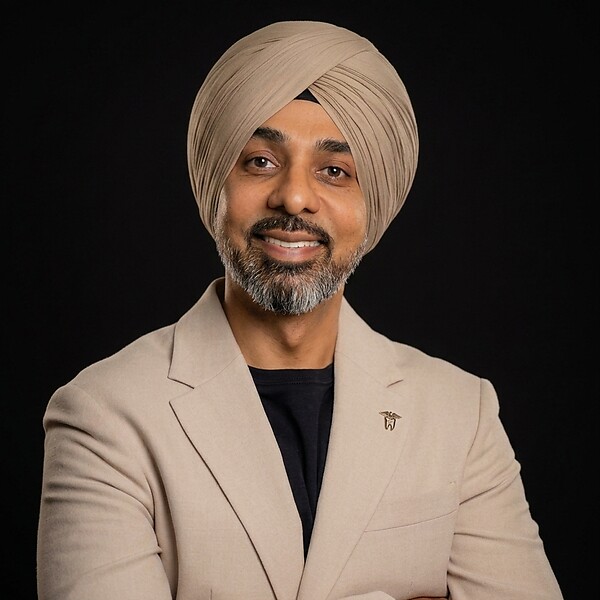
This is a specialty procedure. Most general implant dentists don't perform it. Many oral surgeons refer it out. Dr. Sunny is one of a small number of practitioners in Northern California who performs zygomatic placements in-house, using CBCT-guided surgical planning and IV sedation or general anesthesia.

For patients told "you'll never be able to get implants" or "you'll need 18 months of bone grafting first," zygomatic implants often skip the entire grafting timeline. Many full-arch zygomatic cases are restored with permanent fixed bridges in a single surgical day.
What's included

The Zygomatic difference.

Skips the grafting timeline

No 4–18 months of waiting for grafts to heal. Implants placed and loaded immediately into solid cheekbone.

Performed in-house

We're one of few practices in Northern California performing zygomatic placements without referring out.

Same-day fixed bridge

Most full-arch zygomatic cases get a permanent-feeling temporary bridge installed the same surgical day.

98%+ long-term success

Zygomatic implants have published long-term success rates over 98% — among the highest of any implant procedure.

How it works

From first photo to final crown.

01

Virtual consult

Send a photo + a brief note about your bone-loss history. Dr. Sunny replies in 24 hours.

02

Free 3D CT scan

CBCT imaging shows the entire upper jaw and zygomatic bone in 3D. Definitive candidacy decision happens here.

03

Custom surgical planning

Dr. Sunny designs the zygomatic placement angles using digital planning. Custom surgical guide manufactured.

04

Surgery day

Procedure performed under IV sedation or full general anesthesia. Implants placed, temporary fixed bridge installed same day.

05

Healing (3–4 months)

Cheekbone osseointegration is typically faster than upper-jaw osseointegration. Patient wears the temporary bridge during this time.

06

Final bridge delivery

Custom permanent zirconia or hybrid bridge installed at follow-up.

What patients say

Hear from patients across all three locations.

★★★★★
"$1,999 was unbeatable. Other places quoted me $4,000+. Dr. Sunny was upfront about everything from the first photo I sent. No surprise charges, no hidden fees, exactly what they said."
Sarah M.
Sacramento · $1,999 Single-Tooth Implant
★★★★★
"I'd been hiding my smile for years. Dr. Sunny did my full upper arch and I walked out with permanent teeth that day. Best decision I've made in a decade."
Robert J.
Modesto · All-on-4
★★★★★
"I was nervous because the price seemed too good. But the team explained every step, the 3D scan was free, and the final crown looks better than my real teeth. Five stars all the way."
Maria G.
Fair Oaks · Single-Tooth Implant
Common questions

Common questions about this procedure

Where we are

Three California offices. One trusted team.

Dr. Sunny and the surgical team rotate across all three locations. Same protocols, same implants, same $1,999 price.

Elk Grove

9340 W Stockton Blvd, Suite 120

Elk Grove, CA 95758

(916) 886-1806

Mon–Fri 8am–5pm

See location details →

Fair Oaks

11121 Fair Oaks Blvd

Fair Oaks, CA 95628

(916) 918-5960

Mon–Fri 8am–5pm

See location details →

Riverbank

2754 Topeka St

Riverbank, CA 95367

(209) 569-3502

Mon–Fri 8am–5pm

See location details →
Zygomatic implants: surgical anatomy, evidence base, and northern California access

How zygomatic implants bypass severe maxillary atrophy entirely — and why only a handful of surgeons in the Sacramento region place them.

Surgical anatomy: why the zygomatic bone is a uniquely stable implant anchor

The zygomatic bone — the malar (cheek) bone forming the lateral orbital wall and the prominence below the eye — is dense cortical bone that retains its anatomical volume essentially unchanged throughout adult life. Unlike the alveolar ridge, which resorbs progressively in response to tooth loss (Cawood-Howell class I through VI represents progressive maxillary atrophy), the zygoma does not significantly atrophy because it is not under tooth-stimulation dependence. A zygomatic implant is a 30–55 mm titanium fixture (compared to 8–16 mm for conventional alveolar implants) angled through the lateral maxillary wall and engaging the dense cortical bone of the zygoma. The original protocol was developed by Per-Ingvar Brånemark in the late 1980s for patients with severe maxillary defects from oncologic resection; it was subsequently refined for atrophic-jaw rehabilitation through the 1990s and 2000s. Long-term cumulative survival in peer-reviewed cohort studies consistently exceeds 96% at 10 years.

Why most Sacramento-region practices refer zygomatic cases to Bay Area university programs

Zygomatic implant placement is a specialty procedure that requires specific training, high case volume to maintain proficiency, and surgical equipment most general implant practices do not own (extra-long surgical drills, specialized angled drivers, and CBCT-based 3D planning software validated for zygomatic anatomy). The proximity of the maxillary sinus, infraorbital nerve, and orbital floor demands a surgeon who has placed enough cases to maintain anatomical fluency. Historically, Sacramento-region patients with Cawood-Howell class V/VI atrophy who were told they 'cannot get implants' were typically referred to UCSF Predoctoral, UC San Francisco's prosthodontic residency, or the Stanford-affiliated Bay Area academic programs. Wait times for new-patient consults at these academic centers run 6–12 weeks, and the cost runs $14,000–$22,000 per arch with resident-performed surgery. Dr. Sunny Badyal performs zygomatic placements in-house at our Elk Grove and Fair Oaks offices, with documented experience across the protocol including immediate-load zygomatic-plus-conventional combinations.

Quad-zygomatic protocols and same-day fixed-bridge restoration

For Cawood-Howell class VI atrophy where even the anterior maxillary bone cannot support conventional implants, the quad-zygomatic protocol uses four zygomatic implants — two engaging each malar bone — to support a full-arch fixed bridge without any reliance on the resorbed alveolar ridge. The protocol enables same-surgical-day immediate loading: implants are placed under general anesthesia (administered by a board-certified MD anesthesiologist), multi-unit abutments are seated, and a fixed temporary bridge is delivered before the patient leaves the chair. The final permanent zirconia or hybrid prosthesis follows 3–6 months later after radiographic confirmation of osseointegration. The principal advantage over staged bone grafting plus conventional implants is timeline: a quad-zygomatic case is restored with a fixed bridge in a single surgical day, versus 12–18 months of staged sinus lifts, ridge augmentation, healing, and subsequent implant placement.

Send a photo. Hear from Dr. Sunny in 24 hours.

No pressure, no high-pressure sales call. Just a written treatment plan and a short video from the surgeon — so you can decide if implants are right for you on your own time.

Call UsFree Virtual Consult
Virtual Consult

Free Virtual Consult